Syscon Justice Systems – “Arbutus” Project
Next-generation Offender Management System (OMS) — modernising a legacy Oracle Forms product for a web-based, service-oriented architecture.
- Role: User-centred Design Engineer (first UX practitioner)
- •
- Focus: IA, UI framework concept, task flows, wireframes, validation

Background
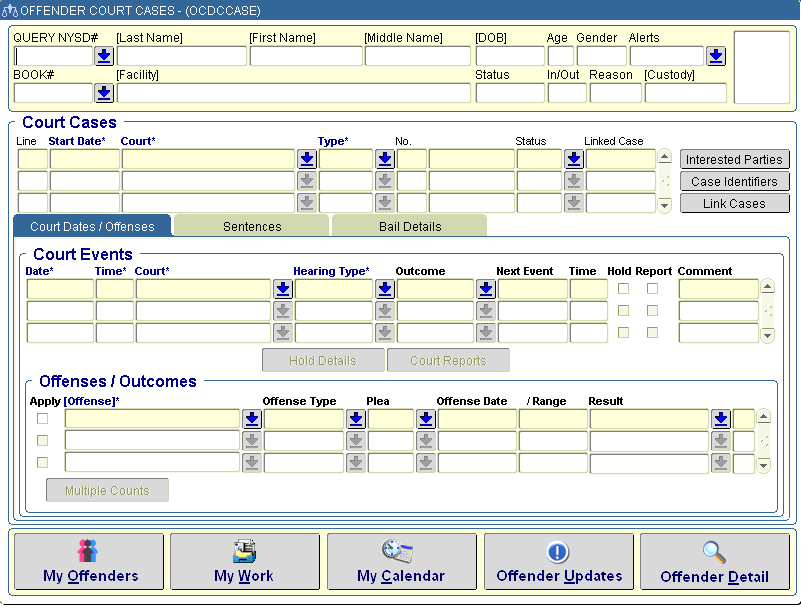
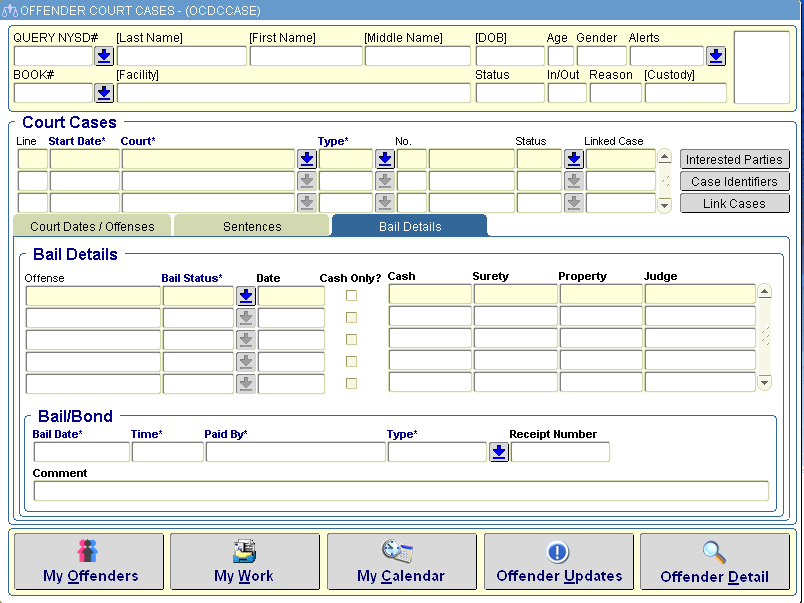
Syscon set out to replace its arcane, Oracle Forms-based Offender/Detention Management application with a modern web application powered by a service-oriented back end. I was hired as the company’s first dedicated UX practitioner to conceive the initial UI framework and information architecture, then design task flows and wireframes for core modules. A second UX designer later joined to focus on visual design; we collaborated in rapid feedback cycles to keep mockups and wireframes in tight alignment.
Objectives & Constraints
Project Objectives
- Design a web-based UI framework that scales across modules and roles.
- Define a clear information architecture for complex workflows.
- Improve learnability and task efficiency for high-risk, high-volume tasks.
- Lay the groundwork for a service-oriented product evolution.
Constraints
- Legacy data models and long-standing correctional workflows.
- Compliance and audit requirements for sensitive personal data.
- Transition to SOA while maintaining operational continuity.
- Limited direct access to end users; relied on internal SMEs.
Process
Discovery & Framing
- Heuristic review of the legacy product and workflow mapping.
- Stakeholder & SME interviews to surface risks and priorities.
- Problem statements and success criteria aligned to policy constraints.
IA & Framework
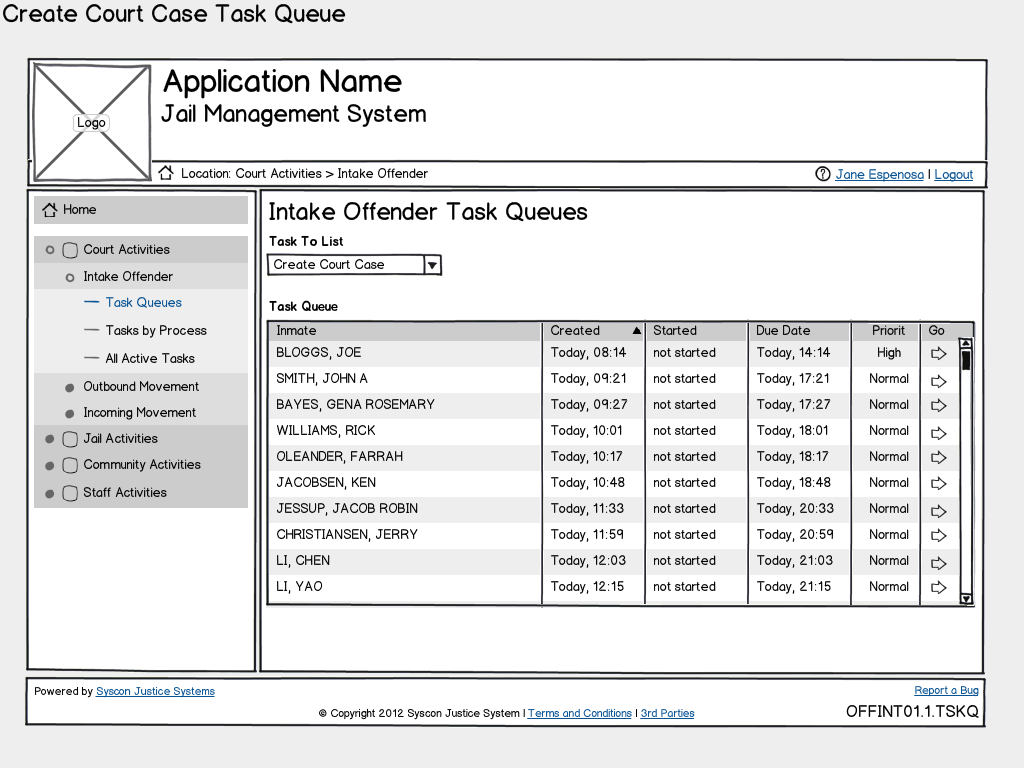
- Navigation schema, module maps, search and task queues.
- Screen templates for common interaction patterns.
- Style guidance aligned to existing/later component libraries.
Wireframes & Mockups
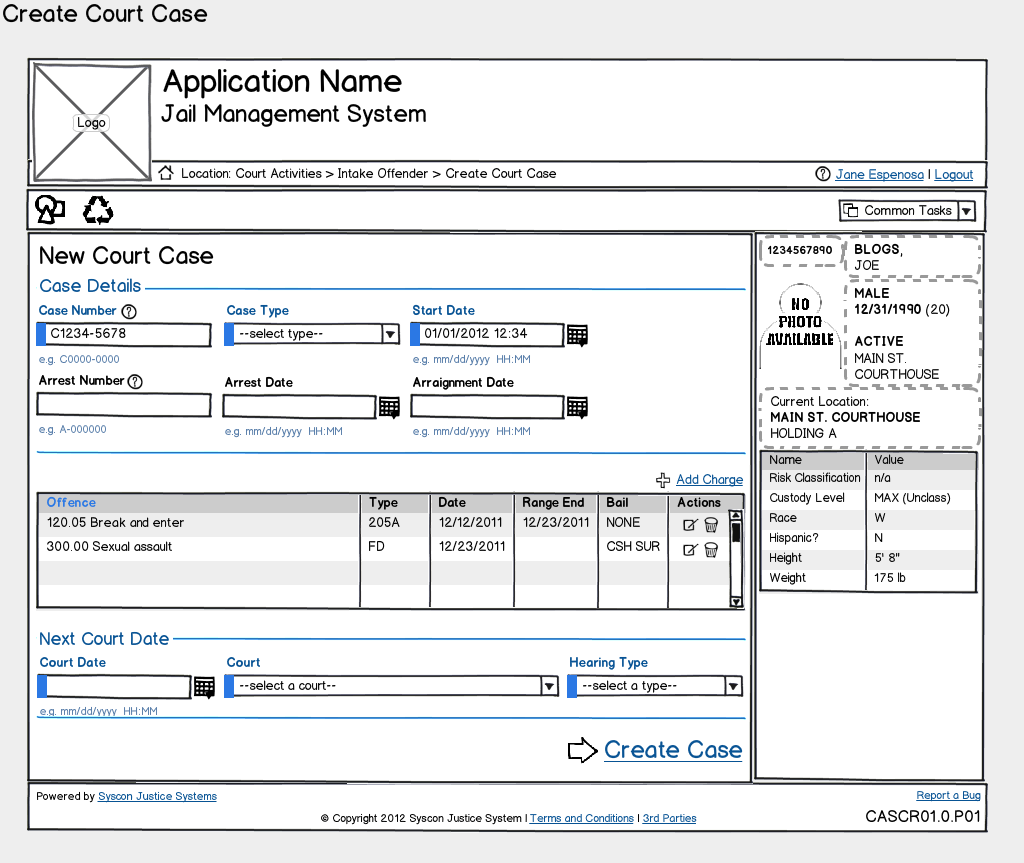
- Task flows and annotated wireframes for core “Court Case” tasks.
- Close collaboration with visual designer to keep artefacts in sync.
- Iteration cadence tied to architecture milestones.
Validation
- Piloted UserZoom for in-house testing with internal SMEs.
- Expert/heuristic reviews to address risk and complexity.
- Evidence-based revisions to IA and interaction patterns.
Key Screens
Click an image thumbnail to open full size
image in a popup browser window.
Subsequent images will open in the same
popup window.
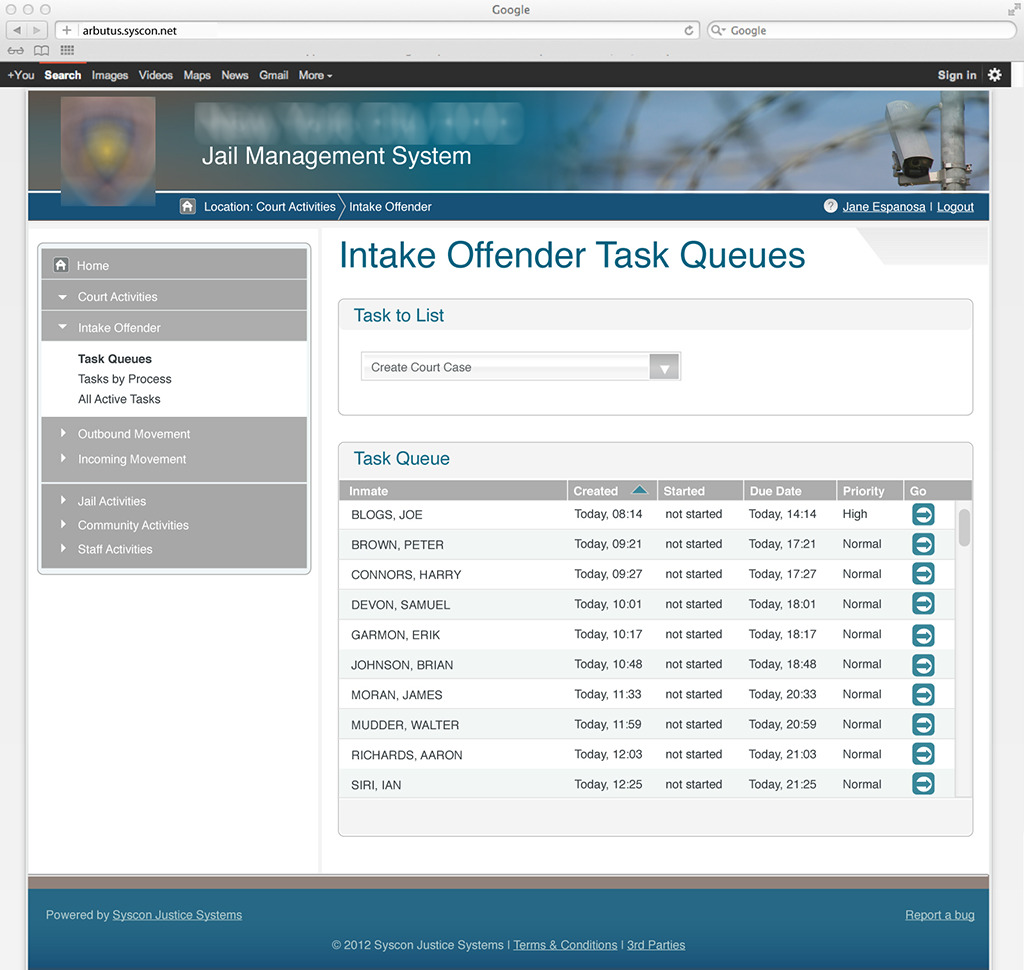
Create Court Case
Designed grouping, naming, and status patterns to simplify multi-sensor setups and reduce misconfiguration risk.

Outcomes & Reflection
Outcomes
- Delivered a comprehensive IA and flexible UI framework for the next-gen OMS.
- Validated navigation and key flows with SMEs using UserZoom and expert review.
- Established Syscon’s first UX process and demonstrated the value of ongoing usability work.
Reflection
Designing for sensitive justice workflows meant balancing compliance, auditability, and user efficiency. Clear templates, consistent interaction patterns, and early validation loops were essential.
This project shaped how I approach complex systems: lead with structure, validate early, and align design guidance to the component libraries used by engineering so delivery stays consistent and sustainable.
See more enterprise UX
Explore additional case studies or get in touch for a walkthrough.